
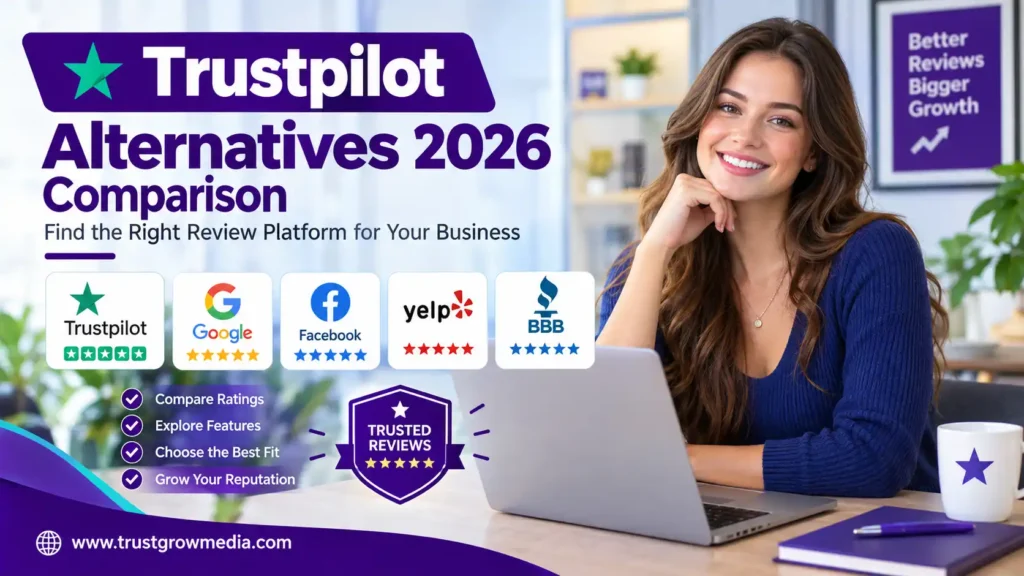
Looking for Trustpilot alternatives in 2026? The right platform depends on how your business collects reviews, where customers search for information, and whether you need a public review profile, product reviews, testimonials, or multi-platform reputation management. Popular alternatives include REVIEWS.io, Google Business Profile, Feefo, Birdeye, G2, Capterra, Yelp, Judge.me, Yotpo, Okendo, Loox, Podium, and Stamped.
For local businesses, Google Business Profile can be particularly relevant because reviews appear alongside businesses in Google Search and Maps. For SaaS and B2B companies, platforms such as G2 and Capterra are designed around software discovery and customer feedback. Ecommerce brands may look at tools such as REVIEWS.io, Feefo, Judge.me, Yotpo, Okendo, Loox, and Stamped for product or company review collection. Meanwhile, Birdeye and Podium focus more heavily on reputation management and customer communication across multiple channels.
When comparing Trustpilot alternatives, consider more than monthly pricing. Look at the review verification process, review ownership and hosting, invitation methods, Google integration, review widgets, automation, analytics, integrations, scalability, and the platforms where your customers already leave feedback. Some alternatives host reviews on their own public marketplace, while others primarily collect, display, or manage reviews from platforms such as Google, Facebook, Yelp, and Tripadvisor.
A strong Trustpilot alternative should ultimately fit your customer journey. If customers discover your business through Google, prioritize Google-focused review collection and reputation management. If you sell software, consider where potential buyers research SaaS products. If you operate an ecommerce store, product reviews, photos, videos, verification, and integrations with your shopping platform may matter more. Comparing these factors side by side can help you choose a review solution that supports long-term customer trust rather than simply adding another review profile.
Understanding the Importance of Customer Reviews for Businesses in 2026
Customer reviews now influence far more than first impressions. They shape online trust, affect market share, and guide how buyers compare brands before making contact. For many businesses, review content also supports visibility across Google reviews, search results, and on-site conversion points.
At the same time, customer feedback helps you spot service gaps and improve customer satisfaction. If you are asking what the best alternatives to Trustpilot for collecting customer reviews in 2026 are, the answer depends on your business type, review volume, and how much control you need.
The Role of Social Proof in Building Online Trust
People rarely buy based on claims alone. They want social proof they can scan fast, compare easily, and trust. That is why a visible star rating, fresh comments, and a complete Google Business Profile can influence how your brand appears in Google search and how confident buyers feel.
For business owners, this matters at every stage of the journey. A review platform isn’t just a place to store opinions. It becomes part of your trust layer across listings, landing pages, and product pages. Public feedback can reassure visitors before they ever speak to your team.
So what features should you look for in a Trustpilot competitor in 2026? Start with moderation, verified collection, automation, integrations, and display tools. The best option helps you gather legitimate reviews, reduce noise, and improve visibility where customers already search.
How Reviews Impact Purchase Decisions and Sales
Reviews affect purchase decisions because they reduce doubt. When buyers see useful comments, clear review requests, and strong user feedback, they move faster. In some categories, platforms also add buyer intent data, which helps sales teams understand where interest is building across a broader user base.
In B2B, G2 stands out because it combines reviews with buyer intent data and category visibility. Trustpilot has wider consumer recognition, but real user testing often favors specialized platforms when buyers want detailed software comparisons and clearer business value.
Key ways reviews support sales include:
- They increase trust at checkout and on product pages.
- They help buyers compare best value, service quality, and fit.
- They give teams signals about objections, strengths, and high-intent interest.
When the feedback is relevant and easy to find, conversions usually improve.
Why Look Beyond Trustpilot? Key Factors to Consider
Trustpilot has scale, brand recognition, and strong market share, but that does not mean it fits every use case. Some companies worry about fake reviews, limited moderation control, or pricing that feels high once they need more than the default free tier.
That is why many local businesses and online brands compare alternatives. If your goal is more legitimate reviews, stronger authenticity, or better workflow tools, looking beyond Trustpilot can be a smart move. The next sections break down where the platform can fall short and what to prioritize instead.
Limitations and Challenges of Trustpilot in 2026
Trustpilot remains the default option for many brands because consumers know the name. It leads the category by market share and powers review widgets across thousands of domains. Still, size does not remove friction. Some merchants say the open platform model can invite fake reviews or irrelevant submissions.
Another issue is moderation. Trustpilot uses AI-driven fraud detection, but businesses still report disputes around flagged content, verification delays, and review bombing risks. That can be frustrating if you rely on reviews to support customer trust and lead generation.
Pricing is another concern. The free tier is useful for basic presence, yet standard business features often require a paid plan. Smaller brands may find that API access, advanced automation, or deeper customization sit too high above the entry level, which makes value comparisons important.

Features and Criteria to Seek in a Trustpilot Alternative
A strong review platform should help you collect, manage, and display legitimate reviews without creating extra admin work. You want something that supports your workflow, fits your size, and gives you enough automation to keep review collection consistent.
Just as important, the platform should match your business model. SaaS companies often need comparison visibility and intent signals. Ecommerce brands may care more about visual UGC, SMS, and checkout impact. Local services usually need listings support, Google Maps visibility, and simple dashboards.
Look for these features:
- Clear moderation and verification rules that support legitimate reviews
- Automation for email or SMS review requests after purchase
- Integrations with CRM, Shopify, and other daily tools
- Widgets and dashboards that make insights easy to act on
The best competitor is the one that fits your goals, not the biggest logo.
What You’ll Need to Get Started with Review Platforms
Getting started with any review platform is easier when you know your basics. Most businesses need a simple setup plan, key integrations, and enough automation to send review requests without manual follow-up every day.
You should also think about who will manage the dashboard and how reviews will be displayed. Some platforms focus on public discovery, while others help you import and organize feedback already spread across the web. Once those foundations are clear, choosing tools becomes much simpler.
Essential Tools and Integrations for Effective Review Management
Good review management depends on connected tools. If your platform works with email, sms, your ecommerce app, and core business systems, you can collect more feedback with less effort. That matters when you want consistent submissions instead of one-off campaigns.
For online sellers, Shopify support is especially important. Platforms like Yotpo are built for ecommerce and connect reviews to loyalty, visual UGC, and repeat purchases. Trustpilot also works with Shopify and WooCommerce, while many brands rely on plugins, widgets, and automated invitations to keep the process moving.
Local and service-based companies should also think about listings and location visibility. Review data tied to Google Maps and your Google Business Profile can strengthen local SEO and discovery. In practice, the right integration setup should make your dashboard useful, not just busy.
Resources for Identifying the Right Platform for Your Business
Finding the right option starts with the right resources. You do not need to guess. Use public comparisons, software review platform directories, and category-specific rankings to understand pricing, ease of use, and where each tool fits.
Directories under Gartner Digital Markets can be especially useful because they help you compare products by use case, not just popularity. If you sell software, places like Capterra, GetApp, and Software Advice can show how different platforms position themselves for business buyers. LinkedIn can also help you see who uses what.
Helpful resources include:
- Capterra and related Gartner Digital Markets directories
- LinkedIn company pages and category comparisons
- Official product pages with pricing, integrations, and widget details
These sources make it easier to judge fit before you commit.
Step-by-Step Guide: How to Choose the Best Trustpilot Alternative
Choosing among Trustpilot alternatives gets easier when you compare them in stages. Start with your use cases, then move into feature comparison, pricing, and integration depth. That keeps you focused on value instead of marketing claims.
Recent user feedback shows that different platforms work for different goals. Some are better for ecommerce, others for software, and others for local reputation. The next four steps give you a practical comparison path so you can choose with confidence and avoid paying for features you will never use.
Step 1: Define Your Business Needs and Goals
Begin with a simple question: what do you want reviews to do for your business? Business owners often want more leads, stronger trust, or better conversion rates. But the right answer depends on whether you run ecommerce, local services, healthcare, home services, or B2B software.
SaaS companies usually need category visibility, comparison content, and signals that support longer buying cycles. A platform like G2 or Subsig may fit better because they focus on software buyers, competitor mentions, and relevant discussions instead of broad consumer traffic.
If you run local services or a smaller brand, your workflow may be different. You may care more about widgets, easy setup, and bringing scattered customer feedback into one place. Defining those needs first keeps you from choosing a platform that looks impressive but does not support your daily goals.
Step 2: Compare Top-Rated Alternatives and Their Features
Once your priorities are clear, compare leading options side by side. This helps you see where each review platform stands on use case, pricing, and display features. In 2026, the best alternatives to Trustpilot range from SaaS-focused tools to ecommerce and SMB solutions.
Here is a simple text table based on the compiled information:
| Platform | Best For | Starting Pricing | Standout Features |
| G2 | SaaS and B2B | $299+/mo | buyer intent data, Grid reports, user feedback |
| Feefo | verified reviews | about £149/mo | moderation, authenticity, verified customers |
| Yotpo | ecommerce | $19–$199+/mo | visual ugc, SMS, widgets, product pages |
| Trustmary | small businesses | $15–$99/mo | imports, A/B testing, no-code widgets |
| Subsig | B2B SaaS teams | $39–$99/mo | AI filtering, real-time alerts, LinkedIn and GitHub coverage |
As you compare, pay attention to Google seller ratings support, website widgets, and whether each platform helps with public discovery or on-site conversion.

Step 3: Evaluate Pricing, Moderation, and Integration Options
After narrowing your list, look closely at pricing, moderation, and integration. A low monthly cost may look attractive, but it means less if the free plan or free tier blocks the features you actually need. This is especially important for small businesses working within a clear budget.
Moderation matters just as much. If fake reviews, low-quality submissions, or unclear disputes are a concern, closed systems like Feefo may offer stronger authenticity. If flexibility matters more, open platforms can still work well, but you need to understand the tradeoff.
Review these points before you decide:
- Whether the pricing tier includes automation, widgets, and API access
- How moderation handles legitimate reviews versus suspicious activity
- Which integration options exist for CRM, Shopify, email, and reporting tools
The best value comes from fit, not just the cheapest monthly number.
Step 4: Leverage Professional Services like Trustgrowmedia.
Even the best software needs a smart rollout. That is where professional services can help. If your team is short on time, outside support can improve setup, review collection, social proof strategy, and ongoing reputation management tools without slowing down internal work.
For example, Trustgrowmedia can support visibility-focused planning around review placement, search presence, and conversion opportunities. Trustgrowmedia can help brands build stronger review and social proof systems that feel consistent across channels. Trustgrowmedia can support faster brand growth when social media reach and trust signals need to work together.
The key is to treat these partners as accelerators. They can help you organize consulting, review strategy, and platform execution around real business goals. If you want trusted Trustpilot alternatives that actually work, software plus expert support is often the strongest combination.
13 Best Trustpilot Alternatives for 2026 (With Pros & Cons)
If you want options beyond Trustpilot, there is no single winner for every industry. The strongest review platform depends on whether you need public consumer trust, niche buyer research, or stronger onsite conversion. Based on the compiled information, the leading alternatives include G2, Feefo, Yotpo, Trustmary, Subsig, and Subscribed. fyi, Google Customer Reviews, Trusted Shops, TripAdvisor, Trustindex, Capterra, Software Advice, and Product Hunt.
Each serves a different role. G2 and Subsig are better for SaaS and B2B visibility. Yotpo is strong for ecommerce product pages and visual UGC. Feefo focuses on verified feedback and moderation. Trustmary works well for small teams that want simple widgets. Niche and industry platforms can also outperform Trustpilot when buyers expect category-specific reviews instead of a broad audience model.

Top Picks for B2B, Niche, and Small Businesses
Different businesses should not shop from the same shortlist. B2B brands often need stronger comparison intent, niche proof, and category relevance. Small businesses usually need best value, simple setup, and support for local SEO or website conversion.
For B2B, G2 is often the strongest software review platform because of its buyer intent data and category badges. Subsig also stands out for SaaS companies because it tracks discussions across LinkedIn, Reddit, GitHub, and other technical spaces. For smaller brands, Trustmary offers affordable widgets and imported customer reviews in one place.
Top picks by use case:
- G2 for B2B software and market share visibility
- Subsig for SaaS companies wanting focused social proof
- Yotpo for Shopify ecommerce and visual UGC
- Feefo for verified reviews and stronger moderation
- Trustmary for small businesses, local businesses, and simple conversion tools
Frequently Asked Questions
Q: Which review platforms offer the best authenticity and moderation?
A: Feefo is one of the strongest choices for moderation and authenticity because it only allows verified customers to leave feedback. That reduces fake reviews and gives businesses more confidence in the quality of customer feedback. Trustpilot has fraud detection, but its open model can create more moderation challenges.
Q: How do alternatives like Birdeye and others compare to Trustpilot?
A: Among the alternatives covered here, G2, Feefo, Yotpo, and Trustmary each compare differently with Trustpilot. G2 is stronger as a software review platform, Feefo focuses on authenticity, and Yotpo adds e-commerce tools and Google Seller Ratings support. Trustpilot still leads in public recognition and broad user feedback visibility.
Q: Are there budget-friendly Trustpilot competitors for small businesses?
A: Yes. Trustmary and Subsig offer more budget-friendly pricing for small businesses than many larger platforms. Trustmary starts at a lower price point and is built for simple review platform setup, while some competitors keep useful features behind higher tiers. Always check whether the free tier or free plan includes what you need.
Q: Can I integrate these alternatives with other business tools and CRMs?
A: Many of them do. Integration options vary, but several platforms support automation, CRM connections, e-commerce tools, dashboards, and listing workflows. Yotpo is especially strong for Shopify, while Subsig includes API and webhook access on all plans. Your best choice depends on the tools your team already uses.
Conclusion
In conclusion, exploring Trustpilot alternatives is essential in today’s digital landscape to foster customer trust and enhance your online reputation. As businesses navigate the evolving market in 2026, leveraging social proof through customer reviews has never been more critical. Selecting the right platform involves understanding your specific needs and comparing features, pricing, and integration options. Remember, it’s not just about collecting reviews; it’s also about ensuring authenticity and effective moderation. For those looking to elevate their brand presence, consider collaborating with trusted partners like Trustgrowmedia, who can provide valuable insights and services tailored to your review management strategy. Take the next step towards building a credible online presence today!