
While some may express frustration with Trustpilot, it’s essential to recognize its role in customer feedback. Many businesses leverage Trustpilot to build credibility and enhance their reputation. Understanding its impact can help web developers and business owners navigate the complexities of online reviews more effectively.
Trustpilot has become a familiar review platform for anyone checking a company before buying. You see it in search results, on brand websites, and across e-commerce. That visibility gives it real influence over consumer trust. Still, many business owners and shoppers ask the same thing: what is the real truth about Trustpilot? The answer is not simple. Some Trustpilot reviews reflect real experiences, while others raise genuine concerns about moderation, fairness, and how the platform works behind the scenes. This can sometimes tell a different story. When it comes to a third-party evaluation, the Better Business Bureau rates Trustpilot as a company with a ‘B’ grade. This reflects BBB’s assessment of Trustpilot’s business practices and responsiveness to complaints, though it is not the highest rating possible. The BBB also notes that Trustpilot is not accredited by the organization.

Understanding Trustpilot’s Role in Online Reputation Management
For many brands, Trustpilot sits near the center of online reputation management. It is one of the best-known review sites, and its ratings can help consumers make the right choices and shape first impressions fast. That matters when consumer trust depends on what buyers see before they click.
At the same time, its business model has drawn scrutiny. Questions often focus on proof of purchase, moderation, and whether all businesses are treated the same, which undermines the very trust that consumers expect. To understand that tension, it helps to look at where Trustpilot came from and why it matters today.
The History and Purpose of Trustpilot in Modern E-Commerce
Trustpilot was founded in 2007 as a platform where consumers could share feedback about businesses. Its stated purpose has been to promote transparency and help people make better buying decisions, becoming the universal symbol of trust over time. It became widely used across e-commerce and many other various sectors.
Today, Trustpilot Group plc is a public company associated with the London Stock Exchange. That makes its scale and visibility even more important, particularly for businesses seeking BBB accreditation. It is not just a simple feedback tool anymore. It plays a visible role in how brands present their online image and how shoppers compare providers.
Still, the platform’s purpose and its business model are often discussed together. On one side, it aims to collect honest feedback and detailed reviews. On the other, critics argue that commercial features can affect how businesses appear. That tension is a big part of the real truth about Trustpilot.
Why Trustpilot Matters for Business Owners and Consumers
Business owners care about Trustpilot because ratings can influence sales, brand perception, and conversions. A strong score on a visible review platform may encourage clicks, raising critical questions for businesses. A weak profile can push buyers toward competitors. That makes profile health a real business issue, not just a branding detail.
For consumers, the appeal is simple. People want genuine feedback before spending money. They compare trustpilot reviews with Google Reviews and other review sites, which serve as a trusted source, to get a clearer picture. In the best case, this helps them spot patterns, weigh service quality, and avoid poor experiences.
Is Trustpilot a reliable source for genuine customer reviews? Sometimes, yes, but not in isolation. It can offer useful signals, yet reading Trustpilot reviews alone may not give a true picture of the service. Buyers and brands both benefit when reviews are compared with other reputable options and reliable sources.
How Trustpilot Works: Review Collection and Detection Mechanics
At a basic level, Trustpilot is built around review collection and the subscription fee structure. Consumers post online reviews, and businesses may also invite customers to leave feedback. That sounds straightforward, but the real system includes review moderation, automated checks, and rules tied to acceptable business practices.
What makes this important is the platform’s effort to detect suspicious activity. Trustpilot says it uses automated systems and human review to identify fake service reviews and other policy issues. The next two sections explain how those detection layers are commonly understood to work.

Built-In Algorithms for Review Integrity
Trustpilot says it uses built-in systems to support review integrity. These tools look for patterns that may suggest review manipulation, suspicious activity, or content that does not fit platform rules. In simple terms, the technology acts as an early filter before deeper review moderation happens, helping to prevent potential ripple effects on consumer trust.
That matters because fake reviews can distort a company’s star rating and mislead buyers. Automated detection is meant to catch unusual behavior at scale, especially on a large review platform where manual checks alone would not be enough.
Common signals may include:
- sudden spikes in positive reviews or negative reviews
- unusual submission behavior linked to bad actors
- patterns that suggest bots, incentives, or coordinated posting
Even so, automated systems are not perfect. That is why human moderators remain part of the process. A review can be flagged by technology, but further action may involve people reviewing whether the content appears consistent with policy enforcement rules.
The Content Integrity Team: Moderation and Policy Enforcement
Beyond automation, Trustpilot relies on a Content Integrity Team and human moderators for moderation decisions. Their role is tied to policy enforcement when content is reported, flagged, or seen as potentially misleading. In theory, this layer exists to protect genuine feedback and improve review integrity.
The platform claims that these measures help support authenticity. That includes reviewing suspicious posts, checking whether content follows platform standards, and acting when reviews appear false, irrelevant, or abusive. This is the part of the system many users notice only after a review is challenged.
Still, criticism often centers on consistency. Some users say legitimate reviews are removed while overly positive content remains visible on social media. That does not prove every decision is wrong, but it does explain the growing skepticism around moderation. For businesses, the lesson is clear: understand the rules before a dispute begins.
Callout Box: Trustpilot presents review moderation as a mix of automated detection and human oversight. The challenge for businesses is that enforcement can feel uneven, so prevention is usually safer than reacting after a flag appears.
[Image Placeholder] Alt Text: Clean dashboard illustration showing review monitoring workflow Caption: Visual overview of how automated checks and moderation may affect review visibility
Common Myths About Trustpilot (Myth vs Reality)
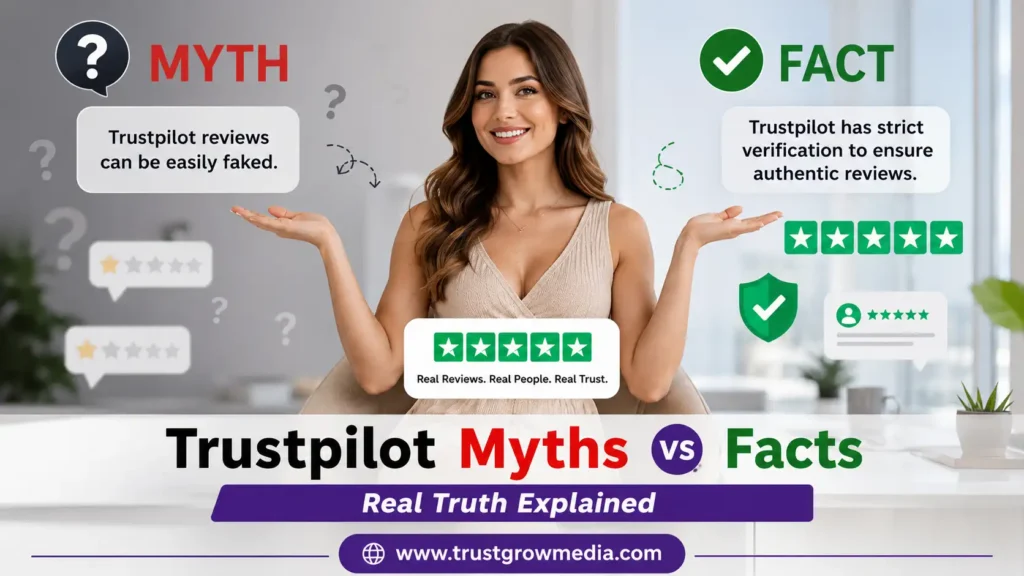
Talk about Trustpilot often swings to extremes. Some people think every bad rating is fake. Others believe the whole system is pay-to-play. The real picture is more mixed, which is why trustpilot myth vs reality matters for both brands and buyers.
The main criticisms usually focus on review manipulation, negative reviews, inconsistent moderation, and the influence of paid services. That growing concern is why some users question whether bad actors or commercial incentives can shape what appears to be trustworthy on the platform, placing a strong emphasis on the need for better standards.
Can Paid Accounts Remove Negative Reviews?
A common myth says paid accounts can simply erase negative reviews and manipulate the number of good reviews displayed. Based on the available discussion, that claim is too absolute. Trustpilot operates with a subscription model and premium services, but that does not mean a business can press a button and delete criticism at will.
What fuels the myth is perception. Critics argue that companies with financial backing may gain advantages in visibility or profile presentation. Some also believe premium services create a troubling reality, leading to a better environment for managing disputes. That has led to suspicion that paid accounts can shape Trustpilot ratings more effectively than unpaid profiles.
Here is the reality: businesses may try to influence outcomes through business practices such as selective review requests or flagging content, but paying does not guarantee removal. That is an important distinction. The stronger risk is not automatic deletion. It is the possibility that commercial features can create an uneven playing field.

How Flagged Reviews Are Actually Handled
When reviews are flagged, they are not always deleted immediately. That is another myth worth correcting. On a large review platform, flagged reviews usually move into a moderation path where automated systems and human review may both play a part.
This process exists because some reports involve genuine concerns while others may come from disputes between businesses and customers. Policy enforcement is supposed to decide whether a review breaks rules, lacks support, or appears misleading. In principle, that review moderation step is meant to separate real complaints from abuse.
The frustration comes from what users describe as inconsistent outcomes. A legitimate post may be challenged, while other questionable content stays live. That does not mean every flag is improper, but it does explain why so many people find the process hard to trust. Transparency matters when profile credibility is at stake.
| Myth | Reality |
| Paying Trustpilot removes bad reviews | Paid access may improve tools and visibility, but it does not guarantee review removal |
| All flagged reviews disappear right away | Flagged reviews may go through automated checks and moderation before action is taken |
| Only fake reviews get removed | Users report that some legitimate reviews are also challenged or taken down |
| A high score always means excellent service | Strong ratings can be useful, but they should be compared with other review sites and actual experiences |
Managing Your Trustpilot Business Profile for Long-Term Compliance
If you manage a Trustpilot business profile, short-term wins can create long-term trustpilot risks. Compliance matters because review websites look for patterns, not just one review at a time. Profile flags and warning banners can damage credibility fast, especially when customers are already alert to red flags.
The safest approach is steady, neutral, policy-aware review collection. That means avoiding tactics that may look selective, manipulative, or misleading. In the next sections, you will see practical ways to reduce profile risk and build a healthier presence over time.
Steps to Avoid Warning Banners and Profile Flags
Warning banners and profile flags usually point to concerns about compliance, including the use of an email address for review requests, not random bad luck. If a business uses review requests in a way that seems selective, promotional, or inconsistent, that can create red flags. The same is true when review patterns look unnatural.
To reduce risk, keep your review process neutral and repeatable. Your team should not invite only happy buyers while ignoring customers with genuine concerns. That kind of filtering can look like review gating and may damage trustpilot review integrity over time.
document proof of purchase and invitation workflows when disputes arise, as these are top ways to ensure trust.
- send review requests evenly across your customer base
- avoid incentives, bots, or pressure tied to positive feedback
- document proof of purchase and invitation workflows when disputes arise
These business practices help support compliance and create a more defensible profile. They also make it easier to respond if moderation questions appear later. Clean processes are often your best protection against avoidable profile flags.
Auditing Review Acquisition & Building Genuine Trust with Trustgrowmedia
Strong review acquisition is less about volume and more about process. If your workflow invites all customers fairly and avoids selective outreach, you are far more likely to collect legitimate reviews that provide an unbiased insight into actual experiences. That is how genuine trust is built on any review platform.
This is where Trustgrowmedia can help. Trustgrowmedia focuses on workflow audits, compliance checks, and long-term reputation strategy so businesses can spot weak points before they turn into profile issues. That support is useful when your team wants a neutral, documented system instead of reactive cleanup.
Are Trustpilot reviews more trustworthy than those on other review sites? Not automatically. Like Google Reviews and Google My Business, usefulness depends on how reviews are collected and moderated. Trustgrowmedia helps brands build cleaner systems so feedback is more balanced, more defensible, and more aligned with consumer trust.
[Image Placeholder] Alt Text: Modern visual of compliant customer review request process Caption: A neutral review acquisition workflow helps reduce profile health risks
Frequently Asked Questions
Q: Is Trustpilot a reliable source for genuine customer reviews?
A: Trustpilot can be a useful review platform, but it should not be treated as the only source of reliable reviews. Some Trustpilot reviews reflect real experiences, while others raise genuine concerns about moderation, authenticity, and the worst qualities of bias in reviews. For better judgment, compare online reviews across multiple platforms.
Q: Can businesses manipulate their ratings on Trustpilot?
A: Businesses may try to influence Trustpilot reviews through selective outreach, flagging attempts, or other risky business practices, potentially compromising personal data. Premium services can add tools and visibility, but they do not guarantee removal of negative reviews. The bigger issue is potential review manipulation through process, not a simple paid delete option.
Q: What makes Trustpilot reviews different from other review sites?
A: Trustpilot reviews stand out because the platform is highly visible in e-commerce and often appears in search behavior related to online businesses. Like other review sites, it mixes honest feedback, positive reviews, and disputed content. Its usefulness depends less on brand recognition and more on whether legitimate reviews reflect real customer experiences.
Conclusion
In summary, understanding the real truth about Trustpilot is essential for both businesses and consumers navigating the landscape of online reviews. By demystifying its algorithms and moderation processes, we can appreciate how Trustpilot contributes to a transparent and trustworthy digital marketplace while addressing critical concerns. A solid grasp of the common myths, such as the misconceptions surrounding paid accounts and flagged reviews, enables business owners to manage their profiles more effectively. By implementing a compliant review strategy and engaging authentically with customers, brands can foster genuine trust and enhance their reputations. If you’re ready to take your reputation management to the next level, reach out to Trustgrowmedia for tailored support and insights.