
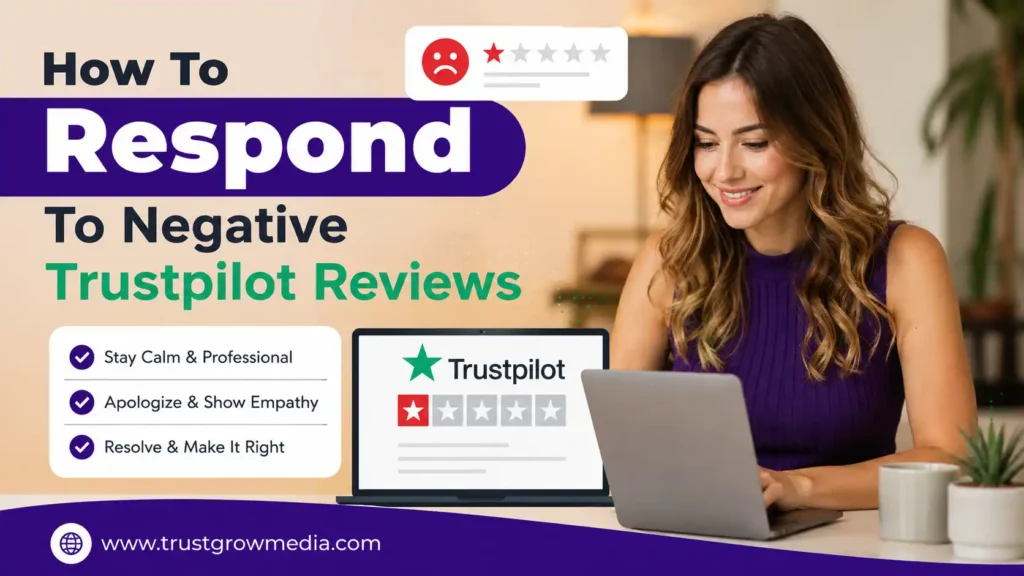
To respond to negative Trustpilot reviews effectively, stay calm, acknowledge the customer’s concern, investigate the issue, and provide a professional solution without becoming defensive. A thoughtful response can protect your online reputation, demonstrate excellent customer service, and reassure potential customers that your business takes feedback seriously.
The best approach is to respond quickly, personally, and professionally. Start by thanking the customer for sharing their experience and acknowledge the specific concern they raised. Avoid arguing, blaming the customer, or making excuses. If the complaint is valid, briefly explain how you are addressing the problem and, when appropriate, invite the customer to continue the conversation privately to resolve sensitive details.
A strong response to a negative Trustpilot review should generally include:
- Acknowledge the feedback – Show that you have read and understood the customer’s concern.
- Remain professional – Never respond emotionally or attack the reviewer, even if you believe the review is unfair.
- Apologize when appropriate – A sincere apology can demonstrate accountability without unnecessarily admitting fault.
- Offer a solution – Explain what you can do to investigate or resolve the problem.
- Move sensitive discussions offline – Avoid sharing personal, order, payment, or other confidential information publicly.
- Follow up – If the issue is resolved, encourage the customer to reconnect so you can make things right.
It is also important to distinguish between a genuine negative experience and a review that may violate Trustpilot’s guidelines. If a review appears fraudulent, abusive, unrelated to your business, or otherwise violates platform rules, businesses can consider using Trustpilot’s reporting process rather than engaging in a public argument.
Most importantly, do not try to hide negative feedback or respond with fake positive reviews. A transparent and respectful response can often be more valuable to your reputation than simply having a perfect-looking review profile. Prospective customers frequently pay attention to how a company handles criticism, not just its positive ratings.
The Importance of Responding to Negative Trustpilot Reviews for US Businesses
For US brands, a negative review on a major online review platform can influence purchase decisions fast. Shoppers often scan negative Trustpilot reviews before they buy because they want the real picture, not just praise. That means your reply matters as much as the complaint itself.
The best way to respond to a negative Trustpilot review as a business owner is to stay professional, answer quickly, and offer a clear path to issue resolution. Done well, your response protects brand image, supports customer satisfaction, and can even strengthen customer loyalty. The sections below break down why this matters.
Why Negative Trustpilot Reviews Matter in E-commerce
In e-commerce, online reviews often stand in for the in-store experience. Potential customers cannot touch your product, meet your team, or ask questions face to face. Because of that, a single negative review can shape how they view your service, shipping, and reliability.
At the same time, review platforms are not only risk points. They are also trust signals. Many buyers read the low ratings first because they want to know what happens when something goes wrong. Your public reply becomes part of that buying decision.
So, can you get a step-by-step guide for replying to negative reviews on Trustpilot? Yes, and it starts with seeing the review as useful customer feedback. In e-commerce, your response shows whether you ignore problems or solve them. That difference can win or lose sales.
Building Consumer Trust Through Transparency
Consumer trust grows when people see honesty instead of image control. If every review is glowing, some shoppers become skeptical. When customer feedback includes a mix of praise and criticism, your business often looks more believable.
Transparency also helps you stay calm and not take negative Trustpilot reviews personally. Why? Because the review is usually about a bad experience with the order, delivery, or product, not a personal attack on you. That mindset keeps your response measured.
When you answer clearly, acknowledge the issue, and explain the next step, people notice. Review platforms reward brands that show mutual respect and openness. Even unhappy customers may soften when they feel heard, and future readers can see your willingness to make things right.
The Role of Trustpilot Reviews in Brand Reputation
Brand reputation is shaped in public. Trustpilot reviews, google reviews, social media comments, and customer reviews all create a visible trail that potential buyers can inspect in minutes. That is why each reply should be thoughtful and consistent.
If you are wondering how to professionally address customer complaints in a Trustpilot review, start with facts and respect. Keep your review responses focused on the customer’s issue, avoid sob stories, and show understanding of the situation. Readers want maturity, not excuses.
A calm, useful reply can do a long way toward protecting online reputation. It shows that your business owner mindset is active, accountable, and serious about customer service. In today’s competitive market, that public behavior can matter just as much as the product itself.
Authenticity vs. Perfection: Why Mixed Feedback Is Valued
Perfect profiles can look polished, but they do not always look authentic. Mixed feedback, with both positive feedback and negative feedback, often creates a stronger sense of honesty. Many customers trust reviews more when they see a balanced pattern.
That matters for your brand image. A few customer reviews describing a bad review or a delay will not automatically hurt you. What shapes perception is how you respond. Effective review responses show empathy, clarity, and a willingness to improve problem areas of your product or service.
What examples of effective Trustpilot review responses can help here? The best ones admit the concern, thank the customer, and offer a real next step. They do not chase perfection. Instead, they show accountability. That authenticity often feels more trustworthy than a wall of positive reviews alone.
Understanding Common Types of Negative Trustpilot Reviews
Not every complaint needs the same reply. Some online reviews come from real service failures, while others reflect misunderstanding, payment friction, or possible abuse of review platforms. Knowing the type of negative feedback helps you choose the right tone and next action.
Common mistakes to avoid when responding to negative Trustpilot reviews often start here: treating every complaint the same way. A delayed order, a refund dispute, and a suspicious post all need different handling. The next sections cover the most common categories you are likely to see.

Real Customer Complaints: Shipping Delays and Quality Issues
Many negative review posts are real customer complaints tied to shipping delays, damaged products, or quality issues. In e-commerce, these are common pressure points because customers expect fast delivery and accurate fulfillment. When that does not happen, frustration rises quickly.
The best way to respond to a negative Trustpilot review as a business owner is to acknowledge the problem without dodging responsibility. If the order arrived late or the item was not right, show that your customer service team is ready to help and fix it.
Watch for these common patterns:
- Delivery arrived later than promised, creating frustration before the product was even used.
- The item quality did not match expectations, leading to distrust and disappointment.
- The wrong item was sent, which signals a breakdown in order handling and customer service.
Fake or Malicious Reviews and How to Identify Them
Some negative Trustpilot reviews may not come from genuine buyers. A post can feel suspicious when it lacks order detail, uses vague accusations, or seems written only to harm your online reputation. In such cases, your approach should stay calm and professional.
How do you respond if you suspect a negative Trustpilot review is fake or from a competitor? Do not attack the reviewer in public. Instead, state that you take feedback seriously, cannot locate the case based on the information provided, and invite the person to contact your support team directly.
Possible warning signs include:
- No order reference, no product detail, and no timeline that matches known customer feedback.
- Harsh claims with no clear issue resolution path or identifiable service problem.
- Language that feels malicious reviews focused rather than solution focused.
Refund Disputes and Payment Problems
Refund disputes and payment problems often create some of the strongest reactions on review platforms. Money issues feel personal to customers, so even a small billing concern can turn into sharp negative feedback. This is especially true when a customer feels ignored.
In these cases, your public reply should show seriousness and structure. Thank them for raising the concern, acknowledge the frustration, and explain that your team wants to review the account details. Keep the response centered on issue resolution rather than debate.
The best way to respond to a negative Trustpilot review as a business owner is to move the matter toward direct support after your initial reply. A billing problem usually needs private verification. Publicly, your job is to show fairness, professionalism, and a willingness to solve the problem quickly.
Unreasonable Expectations or Communication Gaps
Not every bad review comes from a clear service failure. Sometimes the issue comes from a communication gap, unclear expectations, or confusion about what was promised. The customer may still feel disappointed, even if your team followed the process correctly.
How should you professionally address customer complaints in a Trustpilot review when expectations seem unreasonable? Start by recognizing the disappointment without blaming the customer. Then explain the situation in simple terms and offer a helpful next step. That protects your tone and your brand image.
These situations often involve:
- A customer expecting faster delivery or features that were never confirmed.
- A missed message or unclear update that created frustration and a negative review.
- A gap between what the customer heard and what your business actually provided.

[Image Placeholder: Customer support team reviewing online feedback dashboard]
How To Respond To Negative Trustpilot Reviews: Easy Steps
If you want a reliable process for handling negative Trustpilot reviews, keep it simple and repeatable. Good review responses protect your online reputation, support customer service, and improve issue resolution without making the situation bigger than it is.
Can you get a step-by-step guide for replying to negative reviews on Trustpilot? Yes. The strongest approach follows five parts: stay calm, respond with a quick response, show empathy, move the conversation to your support channel, and follow through until the issue is resolved. Here is how each step works.
Step 1 – Stay Calm and Assess the Situation
Start by slowing down. A harsh review can trigger defensiveness, especially if it feels unfair or like tough criticism. Still, the first rule is to stay calm. The customer is reacting to a bad experience, not trying to judge your worth as a business owner.
Next, assess what type of complaint you are dealing with. Is this real negative feedback tied to shipping, quality, or billing? Is it missing details and possibly from someone you cannot identify? Review platforms require a measured response, so gather the facts before writing anything.
How can you stay calm and not take negative Trustpilot reviews personally? Focus on understanding of the situation. Read the post once, step away if needed, then return with a problem-solving mindset. Facts, not feelings, lead to better review replies and better outcomes.
Step 2 – Respond Promptly (24–48 Hour Golden Rule)
Speed matters. A prompt reply tells the reviewer and everyone else reading that your business is present and responsive. When negative trustpilot reviews sit unanswered, they can create the impression that customer service is weak or inactive.
A practical standard is to respond within 24 to 48 hours. That quick response shows respect without rushing into a careless message. It also helps you take control of the situation before frustration grows or the discussion spreads across other review platforms or social media.
How quickly should you reply to negative Trustpilot reviews to show good customer service? Fast enough to show attention, but only after you have basic facts. A prompt, clear response supports customer satisfaction and helps protect online reputation, especially when shoppers are comparing your new reviews.
Step 3 – Empathize, Acknowledge, and Apologize Professionally
Once you reply, lead with empathy. Customers want to feel heard. If they had a bad experience, your first job is to acknowledge it clearly. You do not need a long statement. You need a direct one that shows respect.
A professional apology should be sincere and controlled. Say sorry once, not five times. Overdoing it can make your team sound uncertain. Better review responses combine empathy with action, showing that your business understands the issue and is already working toward the best solution.
How should you professionally address customer complaints in a Trustpilot review? Use simple language such as: “We’re sorry to hear about your experience and appreciate your feedback.” Then mention the next step. That balance of empathy, accountability, and clarity is what builds confidence on an online review platform.
Step 4 – Offer a Support Solution & Move Conversation Offline
After the public acknowledgment, shift the detailed discussion offline. That protects privacy, reduces back-and-forth in public, and gives your support team room to review the case properly. A Trustpilot reply should open the door, not contain the entire case file.
What is the best way to respond to a negative Trustpilot review as a business owner? Offer a solution and provide a direct contact path, such as a support email or phone number. This shows you are not hiding. You are trying to solve the problem in the right setting.
Include essentials like:
- A clear invitation to contact your support team for faster issue resolution.
- A direct phone number or email so the customer knows where to go next.
- A note that you want to review the case details and provide the best solution.
Step 5 – Encourage Issue Resolution and Review Update
A reply is only the start. The real value comes from service recovery after the public response. If you solve the problem quickly and efficiently, unhappy customers may return and your strained customer relationship can improve over time.
Once the issue is resolved, thank the customer for giving you the chance to fix it. You can also ask whether the outcome improved their experience. This keeps the tone respectful and shows that customer feedback leads to real action inside your business.
Can responding to negative Trustpilot reviews help improve your brand reputation? Yes, if the response leads to issue resolution. When happy customers see that problems are handled well, your public image gets stronger. In some cases, the customer may even choose to post a review update reflecting the positive experience.
[Image Placeholder: Business owner drafting a professional Trustpilot response] Alt Text: How To Respond To Negative Trustpilot Reviews | Easy Steps with a professional reply example
Professional Tone & Language: Best Practices for Replying
The tone you use in review replies matters almost as much as the message itself. Customers want professionalism, but they also want warmth. If your reply sounds cold, defensive, or scripted, it can weaken customer feedback trust on any online review platform.
What tone should you use when replying to a negative review on Trustpilot? Aim for calm, respectful, and helpful language. The goal is not to win an argument. It is to show empathy, protect your brand image, and guide the conversation toward a fair solution. These best practices make that easier.

Choosing the Right Words to Convey Empathy
Empathy starts with word choice. The best ways to respond on review platforms use clear language that recognizes the customer’s frustration. Short phrases often work better than long explanations because they sound more sincere and easier to trust.
If you are wondering how to professionally address customer complaints in a Trustpilot review, avoid making the reply about yourself. Skip phrases like “I think” or “I feel.” Those can shift attention away from the customer. Instead, focus on what happened and what you will do next.
Strong opening lines include simple wording such as, “We’re sorry to hear this,” or “Thank you for sharing your feedback.” These phrases acknowledge the experience without sounding dramatic. In online reviews, calm empathy helps reduce tension and makes the customer more likely to keep talking productively.
Maintaining Brand Voice and Consistency
Your brand voice should stay steady across trustpilot reviews, social media, and other customer touchpoints. A business that sounds caring in marketing but defensive in review replies creates doubt. Consistency helps build online reputation and supports long-term customer loyalty.
That does not mean every reply should sound identical. It means the tone should feel recognizably yours: respectful, clear, and solution focused. When teams handle new reviews, shared standards help avoid mixed messages and protect the side of the story you want future readers to see.
What tone should you use when replying to a negative review on Trustpilot? Use one that fits your brand while still showing utmost humility. Your replies should feel human and accountable. A consistent voice helps customers believe they will get the same level of care everywhere they interact with you.
Balancing Formality and Approachability
Good review responses sit between stiff formality and casual language. If the reply is too formal, it can feel distant. If it is too relaxed, it may sound dismissive. Customers want customer service that feels serious enough to help and approachable enough to trust.
How should you professionally address customer complaints in a Trustpilot review while keeping the tone friendly? Use direct sentences, polite wording, and a clear action step. You can be warm without being overly familiar. That balance keeps the exchange respectful and efficient.
A strong reply might acknowledge the concern, apologize once, and invite the customer to continue with your support team. This creates a more conducive environment for issue resolution. It also signals that your business is focused on delivering a better experience, not defending itself in public.
Mistakes to Avoid When Responding to Negative Trustpilot Reviews
Even well-meaning businesses can damage their online reputation by replying the wrong way. The biggest mistakes usually come from emotion, delay, overpromising, or using weak stock language that ignores the real concern. A negative review needs care, not panic.
What are common mistakes to avoid when responding to negative Trustpilot reviews? Do not react personally, do not wait too long, do not offer a temporary fix you cannot deliver, and do not post generic customer feedback replies. The next sections break down why each mistake hurts trust and how to avoid it.
Reacting Emotionally or Taking Feedback Personally
A tough read can make any owner or manager feel defensive. When negative feedback sounds unfair, the instinct may be to correct every detail or push back hard. That reaction is understandable, but it rarely helps the public conversation.
How can you stay calm and not take negative Trustpilot reviews personally? Remind yourself that the customer is upset with the experience, not with you as a person. That small shift makes it easier to answer with facts, professionalism, and a real plan.
Emotional review responses can deepen a strained customer relationship and create new trust issues with future readers. In negative trustpilot reviews, your calm reply tells the audience that your business can handle pressure. That steadiness is far more persuasive than a defensive explanation or public argument.
Ignoring Complaints or Delaying Your Response
Silence sends a message. When complaints sit unanswered on an online review platform, people may assume your customer service team is absent or uninterested. Even if you are working behind the scenes, no public response leaves readers guessing.
How quickly should you reply to negative Trustpilot reviews to show good customer service? Aim for a timely response within 24 to 48 hours whenever possible. That window shows attention and care without sacrificing accuracy. Delays can make the issue feel worse than the original complaint.
Ignoring a negative review also means losing insight. Customer feedback, even when hard to read, can reveal service failures, communication gaps, or problem areas of your product. Responding quickly helps you protect reputation and learn where a better process is needed.
Making Unrealistic Promises in Public Replies
When tension is high, businesses sometimes promise too much just to calm the moment. That may seem helpful, but an unrealistic promise usually becomes a temporary fix. If you cannot deliver, the service failure gets worse and trust drops again.
What is the best way to respond to a negative Trustpilot review as a business owner? Be honest about what you can do. Give the real picture, explain the next step, and offer plausible solutions. Customers may not love the answer, but they usually respect clarity.
Overpromising harms customer loyalty because it creates new disappointment after the original problem. Meaningful relationship building comes from honesty and follow-through, not exaggerated assurances. Public replies should always reflect what your team can actually deliver within a reasonable timeline.
Using Generic or Copy-Paste Replies
Generic replies are easy to spot. When every response says the same thing, it can seem like your business is not truly reading customer experience details. On review platforms, copy-paste language often feels cold and reduces credibility.
What examples of effective Trustpilot review responses can you share? The strongest ones mention the specific issue in simple terms, thank the reviewer, and point to a clear next step. Even if you use a standard structure, the wording should reflect the case, not just a template.
Personal recommendations and online reviews influence buying decisions because they feel real. Your review replies should do the same. A tailored response shows care, improves trust, and supports a more tasteful manner of communication than a flat, repetitive script ever could.
Plug-and-Play Response Templates for Key Scenarios
Templates help your team move faster without losing professionalism. The key is to use response templates as a framework, then personalize them with the customer’s issue, order context, and next step. That keeps review replies useful and human.
Could you provide a template for responding to negative reviews on Trustpilot? Yes. Below are four practical examples for common situations. Each one is short, respectful, and focused on customer satisfaction. Adapt them to your online review platform workflow, then let your support team handle the details privately.

Template for Shipping Delays & Logistics Concerns
Shipping delays are one of the most common reasons for negative feedback in e-commerce. A strong quick response should acknowledge the inconvenience, avoid excuses, and move the customer toward direct support. This keeps the reply calm and solution focused.
You want the customer to see that you understand the disruption. Future readers should also see that your business takes logistics issues seriously and is willing to review what happened.
| Template Part | Example |
| Opening | We’re sorry to hear about the shipping delays and appreciate your customer feedback. |
| Acknowledgment | We understand how frustrating it is when an order does not arrive on time. |
| Action Step | Please contact our support team with your order details so we can review the shipment and provide the best solution. |
| Close | Thank you for bringing this to our attention. We’d like the chance to make this right. |
Template for Product Quality or Wrong Item Issues
Product quality concerns and wrong item complaints require a careful reply because they affect confidence in your fulfillment process. Your response should validate the negative review, show accountability, and guide the customer toward a fix through customer service.
Do not argue about the product in public. Instead, show that you take the issue seriously and want to correct it. That keeps the tone professional and protects trust with potential customers reading the thread.
| Template Part | Example |
| Opening | We’re sorry to hear that the item you received did not meet expectations. |
| Acknowledgment | We understand how disappointing product quality issues or receiving the wrong item can be. |
| Action Step | Please reach out to our customer service team with your order information so we can review the case and help. |
| Close | Thank you for your feedback. We appreciate the opportunity to improve your experience. |
Template for Refund & Billing Disputes
A refund dispute or billing complaint should be answered with extra clarity. These cases often involve private account details, so your public message should acknowledge the concern while directing the customer to your support team or phone number for verification.
The goal is to show fairness and urgency without discussing sensitive details publicly. This protects both the customer and your business while signaling that a real review is underway.
| Template Part | Example |
| Opening | We’re sorry to hear about your refund dispute and appreciate you sharing your feedback. |
| Acknowledgment | We understand that billing concerns can be frustrating and want to review this carefully. |
| Action Step | Please contact our support team by email or phone number with your order details so we can investigate and find the best solution. |
| Close | Thank you for bringing this to our attention. We’re here to help resolve it. |
Template for Suspected Fake Trustpilot Reviews
When a fake review looks suspicious, keep your public reply neutral. You should not accuse the reviewer or argue. Instead, state that you take trustpilot reviews seriously and cannot locate the case based on the details provided. That protects your online reputation while staying professional.
How do you respond if you suspect a negative Trustpilot review is fake or from a competitor? Invite the reviewer to contact your team directly and review the post through the platform’s reporting process if it appears to break review platforms rules.
| Template Part | Example |
| Opening | We take all customer feedback seriously and want to review this concern. |
| Acknowledgment | At this time, we are unable to identify the order or interaction based on the information in this review. |
| Action Step | Please contact our support team with your details so we can investigate further. |
| Close | If this review was posted in error, we’d appreciate the opportunity to clarify the situation. |
enhancing your review management strategies with professional services. If you’re ready to take control of your online reputation and optimize your Trustpilot reviews, get a free consultation with our experts today!
Frequently Asked Questions
Q: How quickly should a business respond to negative Trustpilot reviews?
A: A business should aim for a quick response within 24 to 48 hours. That timing shows strong customer service, respect for customer feedback, and active management of negative trustpilot reviews. Fast review replies also reassure future readers that your team pays attention and takes complaints seriously.
Q: What is the best way to address fake or malicious Trustpilot reviews?
A: Address a fake review calmly and professionally. State that you take trustpilot reviews and customer feedback seriously, but cannot identify the case from the details provided. Invite direct contact, then use the review platforms reporting process if needed to protect your online reputation.
Q: Can responding to negative Trustpilot reviews help improve my brand reputation?
A: Yes. Thoughtful review responses show accountability, empathy, and professionalism on an online review platform. When people see that you handle a negative review with care and act on customer feedback, your brand reputation can improve because your business appears trustworthy and responsive.
Conclusion
In conclusion, effectively responding to negative Trustpilot reviews is essential for maintaining your brand’s reputation and building customer trust. By staying calm, addressing complaints promptly, empathizing with customers, and taking discussions offline, you can navigate even the toughest feedback with grace. It’s important to remember that negative reviews aren’t the end; they can provide valuable insights into areas for improvement and demonstrate your commitment to customer satisfaction. As you implement these best practices, consider