
Confused about Google Reviews vs Trustpilot? Discover the key differences between these platforms and choose the one that suits your needs best on our blog!
Introduction
Picking the right review platform can shape how people see your brand before they ever contact you. Some customers look at your business profile on Google, while others search for deeper customer feedback on a third-party site. So which option makes more sense for you? Google Reviews and Trustpilot both help build trust, but they solve different problems. If you want better visibility, stronger credibility, or a smarter way to collect reviews, it helps to know where each platform fits. For businesses looking to strengthen their online reputation across different review platforms, TrustGrowMedia can provide helpful guidance and reputation-focused solutions.
Overview of Google Reviews and Trustpilot
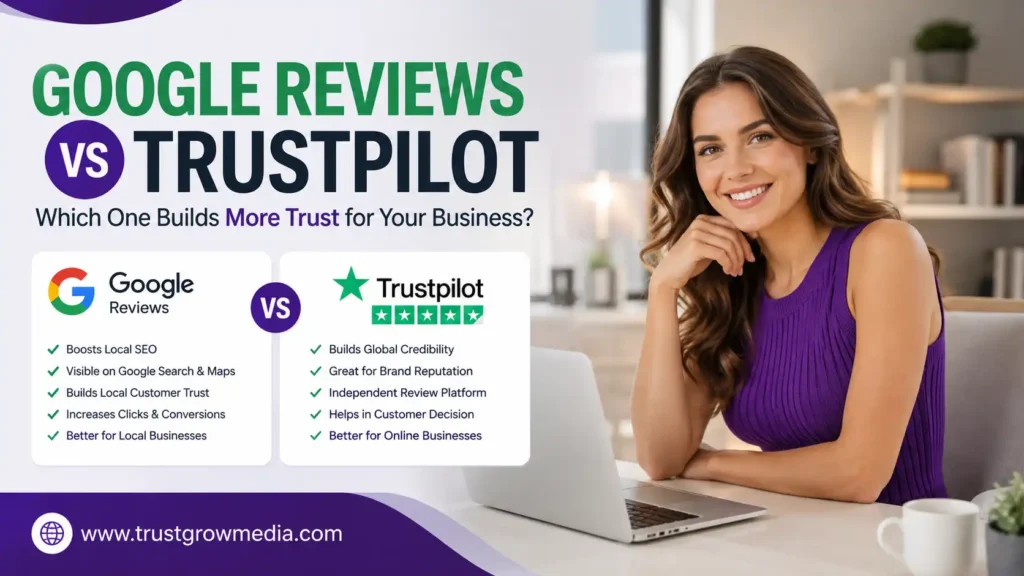
Google reviews appear on your Google business profile and show up in Google Search and Google Maps. They are easy for customers with a Google account to leave, which helps many businesses build review volume fast.
Trustpilot reviews live on a separate review platform built for reputation research. That is one of the main differences for businesses. Google supports visibility in local search, while Trustpilot acts as a dedicated review destination where shoppers compare brands and judge trust before buying.

How Google Reviews Works for Businesses
Google reviews are tied directly to your Google business profile. When people search your business name or browse Google Maps, they can see your star rating, number of reviews, and recent comments right away. That visibility makes Google especially useful for local businesses that rely on nearby customers.
Anyone with a Google account can leave feedback. Because there is no purchase verification required, review collection is usually faster and easier. You can ask customers for reviews after a visit, service call, or completed job, then guide them with simple review invitations through your existing process.
For a small business, this is often the first place to focus. Positive google reviews can improve search results and help you appear higher in local searches. If your growth depends on maps, calls, and walk-ins, Google usually delivers the most immediate value.
How Trustpilot Serves Both Businesses and Consumers
Trustpilot reviews serve a different role. Instead of living inside search results or maps, they sit on a dedicated review destination where people go to research brands. That makes Trustpilot useful when customers are comparing options and looking for stronger trust signals before making a decision.
Businesses can send structured review requests and build a Trustpilot profile that feels more like a reputation hub. The platform also supports verified review labeling for invited customers, which can make review collection feel more controlled and more credible to buyers.
Some entrepreneurs pay for Trustpilot because the paid plans add automation, integrations, and deeper management tools. For ecommerce brands, SaaS companies, and businesses in a competitive space, those features can support customer trust, social proof, and ad performance in ways a free profile alone may not.
Core Differences Between Google Reviews and Trustpilot
At the core, google reviews and trustpilot reviews are built for different purposes. Google is strongest when you want local visibility, quick review volume, and direct impact on how your business appears in search. Trustpilot is better known as an independent review platform for brand research and online trust.
There is also a difference in authenticity controls and cost. Google is free and open, but moderation is lighter. Trustpilot offers stronger fraud detection and verified review options, yet many advanced tools sit behind paid plans. These differences shape how each platform fits your goals.
Review Collection Methods and User Base Comparison
The way each platform gathers feedback changes the type and pace of review collection. Google makes things simple. If a customer has a google account, they can leave a review quickly. That openness can create lots of reviews, but it can also increase the risk of questionable posts.
Trustpilot is more structured. Businesses often use review requests and invitations to send customers to a dedicated review destination. That process can slow volume, yet it gives buyers extra confidence when reviews are marked as verified or come through a managed flow.
| Factor | Google Reviews | Trustpilot |
| Who can review | Anyone with a Google account | Often invited customers through review requests |
| Collection style | Open and fast | More structured and controlled |
| Volume potential | Higher review volume | Usually lower, but more managed |
| Trust perception | Convenient and visible | Stronger independent trust signals |
Businesses may try to game either system, but both platforms face fake review issues. Trustpilot puts more emphasis on fraud detection, while Google is known for lighter moderation.
Visibility in Google Search Results and Local SEO Impact
If your main goal is local seo, Google clearly has the edge. Reviews on your google business profile influence how your company appears in search results, especially in Google Maps and the local pack. For local businesses, that can mean more calls, visits, and new customers.
Trustpilot does not improve local rankings. It will not push you higher for local searches like near me terms. Still, Trustpilot pages can show up when people search your brand name plus reviews, so it supports visibility during brand research rather than neighborhood discovery.
That distinction matters. Google reviews help with local search results and map placement. Trustpilot can support seller ratings and online credibility, especially for ecommerce brands using google shopping or broader search campaigns. If SEO means local reach, Google is usually more beneficial.
Features and Integration Capabilities
Features are another major separator between the two options. Google reviews come with a simple business profile dashboard where you can read feedback, reply, and view your overall rating. It works well for basic management but offers limited depth.
Trustpilot reviews often come with broader integration options, especially on paid tiers. That review platform supports automation, website widgets, and deeper tracking tools. The next sections look at how each platform connects with websites, third-party tools, and Google Ads product ratings.
Integration with Business Websites and Third-Party Tools
Both platforms can appear on your site, but the setup differs. Google reviews usually need third-party integration tools to pull ratings from your business profile onto your pages. Trustpilot offers its own widget system, which many brands use to place social proof directly on the brand’s own website.
That matters if your site is part of the sales process. Trustpilot tends to offer more polished display options and stronger recognition as an independent source. Google reviews are still useful, especially if visitors already know your business name and want fast reassurance.
When choosing between them for your website, consider:
- whether you want simple star displays or more advanced integration
- whether you use ecommerce platforms like Shopify or WooCommerce
- whether buyers trust third-party trust signals more than on-site testimonials
- whether your business profile already drives most of your conversions
In many cases, Google reviews support local credibility, while Trustpilot reviews help strengthen brand trust on key landing pages and checkout journeys.
Use with Google Ads and Product Ratings
Here is where the difference becomes very practical. If you want seller ratings in google ads, Trustpilot has an advantage because it is a Google-approved review platform for that use case. That means Trustpilot reviews can help feed the ratings that appear under certain ads.
Google reviews from your business profile do not support Google Ads seller ratings in the same direct way. Even though they live on Google, they are tied more closely to local visibility than to ad extensions for online campaigns. That catches many businesses off guard.
For ecommerce companies running google shopping or search campaigns, this can be a strong reason to use Trustpilot. Product ratings and seller ratings add visible social proof at the moment people compare offers. If paid traffic is central to your growth, that integration can be worth serious attention.
Reputation Management and Review Moderation
Every review platform affects your company’s reputation, but not every platform gives you the same level of control. Google is easy to use and free, yet review moderation is fairly limited. That can make fake reviews and unwanted comments harder to challenge.
Trustpilot puts more focus on fraud detection and review moderation. It is not perfect, but its system is more structured. If you worry about negative reviews, suspicious activity, or long-term reputation tracking, the differences become more obvious once you start managing feedback day to day.
Handling Negative Feedback on Each Platform
Negative reviews can hurt, but they also show how you respond under pressure. On Google, replies are straightforward, but review moderation is limited. If a comment feels unfair or suspicious, removal can be difficult. That can make the platform feel harder to manage when your company’s reputation is under stress.
Trustpilot gives businesses a more structured environment. Its systems for flagged content, verification, and fraud detection can make it easier to address questionable posts. Still, some businesses feel that negative feedback can remain visible even when disputed, so neither platform offers complete control.
A practical way to handle either platform is to:
- respond quickly and calmly
- focus on facts, not emotion
- align every reply with your business goals
- show future customers that customer trust matters
If ease of management is the priority, Trustpilot often provides more tools. If visibility matters most, Google remains essential despite the challenges.
Fake Review Detection and Authenticity Measures
No review system is fully protected from abuse. Businesses can face fake reviews on both platforms, and some may try to influence ratings unfairly. That is exactly why authenticity matters so much when customers compare brands.
Google allows broad access, which helps with review volume but creates more room for spam or false claims. Its moderation catches some problems, yet many businesses find the process limited. Trustpilot takes a stronger approach with fraud detection and the option for a verified review through invited customers.
That stronger structure often makes Trustpilot look more reliable in higher-stakes buying decisions. On paid tiers, businesses may also get deeper tools to track trends and monitor patterns over time. Those deep analytics do not make the platform flawless, but they can help you spot unusual activity faster and protect trust.
Costs and Value Considerations for U.S. Businesses
Cost is often the clearest difference between the two platforms. Google is tied to your business profile and does not charge for collecting or responding to reviews. For many U.S. businesses, that free plan alone makes it the obvious starting point.
Trustpilot also offers a free plan, but it is limited. Once you need more review volume, automation, or advanced features, paid plans enter the picture. The value depends on whether those extra tools support stronger conversions, better ad performance, or more efficient reputation management.
Free vs. Paid Features: What You Get on Each Platform
Google keeps the model simple. You get basic features through your Google Business Profile at no cost. That includes collecting reviews, replying publicly, and viewing your rating. For many service companies and local shops, that is enough to support visibility and trust.
Trustpilot starts with a free plan too, but it limits review invitations and access to broader tools. Paid plans begin around $259 per month per domain and rise sharply for brands that want more automation, integrations, and reporting.
| Platform | Free Plan | Paid Plans |
| Google Reviews | Collect and reply to reviews, manage core profile features | No separate paid tiers for standard review management |
| Trustpilot | Limited invitation credits and basic features | Advanced features, automation, integrations, analytics, and higher support levels |
Why pay when Google is free? Because some businesses need more than collection. They want review strategy tools, stronger trust signals, and systems that scale with growth.
Why Some Businesses Invest in Trustpilot
The main reason businesses invest in Trustpilot is not just reviews. It is what those reviews can do in a buying journey. Trustpilot reviews often carry strong independent social proof, especially when customers are researching a brand before a higher-value purchase.
Paid tiers can support a more deliberate review strategy. Businesses may use automated invitations, better widgets, integrations, and reporting to build a stronger Trustpilot profile over time. For brands selling online, those tools can help create more consistent customer trust across ads, product pages, and checkout flows.
There is also a brand perception angle. Trustpilot’s third-party identity and familiar trustpilot logo can strengthen brand trust in competitive categories. That does not mean every company should pay. It means the investment makes more sense when reputation directly affects conversion and ad efficiency.
Choosing the Best Review Platform for Your Business Needs
There is no single best review platform for every company. The better choice depends on your business type, where customers discover you, and what role reviews play in your sales process. Are you trying to win local traffic, improve paid ad performance, or strengthen brand perception?
A smart review strategy starts with your business goals. If customer feedback mainly supports local discovery, Google usually leads. If buyers spend more time comparing brands online, Trustpilot can be a stronger addition. The next sections break that choice down in a more practical way.

Factors to Consider Based on Business Size and Industry
Start with how your business actually gets customers. A local service company usually benefits most from positive google reviews because visibility in maps and local results can drive direct leads. An online-first brand may get more value from trustpilot reviews if buyers compare options before committing.
Business size also matters. A small business may not need paid software or advanced workflows. A larger company in a competitive space may care more about structured review volume, branded trust pages, and ad support. Industry changes the picture too. Restaurants, salons, and repair shops need local discovery. Ecommerce and SaaS brands often need stronger comparison-stage trust.
Ask yourself:
- Where do customers first find us?
- Does our business type depend on local searches?
- Are reviews part of our website and social media strategy?
- Do we need scale, automation, or just steady feedback?
Those answers usually point to the right fit.
Which Review Site Do U.S. Customers Check Before Buying?
U.S. customers check both, but not always at the same moment. Google often wins earlier, when people want quick customer reviews, a visible star rating, and basic reassurance while searching for a business. It is fast, familiar, and easy to spot in search results.
Trustpilot tends to matter more at the decision stage of the buying journey. That is when people actively compare brands, study trust signals, and look beyond a business’s own website. For higher-consideration purchases, the platform’s independent feel can carry extra weight.
The exact winner depends on intent. When people need a nearby provider, Google usually gets checked first. When they want deeper validation before spending more money, Trustpilot can become more influential. London Research findings also suggest that Trustpilot-style trust displays can perform strongly when the star rating and number of reviews are visible in ads.
Frequently Asked Questions
Q: What are the main differences between Google Reviews and Trustpilot for businesses?
A: Google reviews connect directly to your business profile and show in search results and Google Maps, which helps local discovery. Trustpilot reviews live on an independent review platform focused on brand research. Google is free and local-focused, while Trustpilot offers stronger trust tools and more structured management.
Q: Which is more beneficial for improving SEO: Google Reviews or Trustpilot?
A: For local seo, google reviews are more beneficial because they influence visibility in google search, Maps, and local searches. Trustpilot reviews can appear for branded queries, but they do not improve local rankings. If your goal is local traffic, Google usually delivers the stronger SEO impact.
Q: Why do some entrepreneurs choose to pay for Trustpilot when Google Reviews are free?
A: Entrepreneurs pay for Trustpilot because its paid plans offer tools beyond a free plan, such as more review invitations, automation, integrations, and stronger trust displays. Google Business Profile is free, but Trustpilot can better support online brand research, ad visibility, and a more managed trustpilot profile.
Q: Are Google Reviews or Trustpilot reviews considered more trustworthy by customers?
A: It depends on context. Google reviews are trusted for quick local decisions, especially when there are many positive reviews. Trustpilot often feels more credible during brand comparison because of stronger trust signals and verification options. Since fake reviews can happen anywhere, authenticity measures shape customer trust on both platforms.
Conclusion
In conclusion, choosing between Google Reviews and Trustpilot is a crucial decision that can significantly impact your business’s online reputation and customer perception. Both platforms have unique features and benefits, catering to different needs and audiences. Google Reviews enhances your local SEO, while Trustpilot offers in-depth insights into customer feedback and can build trust through its review verification process. Evaluate your business size, industry, and customer preferences to determine the platform that aligns best with your goals. Ultimately, leveraging the right review platform not only boosts your visibility but also fosters trust and drives sales. If you’re still uncertain about which platform suits your needs, feel free to reach out for a consultation!