
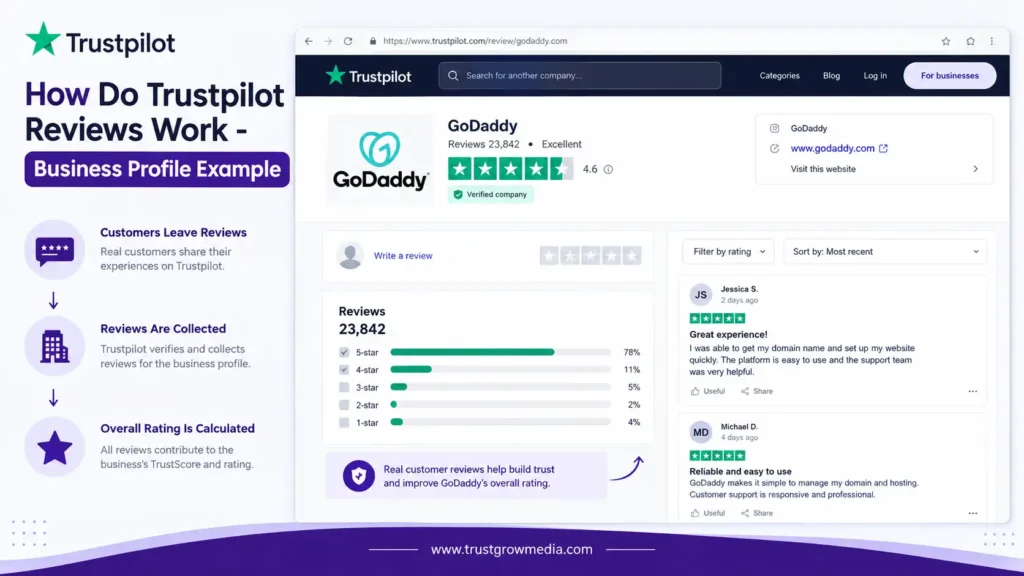
In today’s digital-first economy, consumer trust is the most valuable currency. Before making a purchase or signing up for a service, over 90% of online buyers read reviews. Among the dozens of feedback platforms available today, Trustpilot stands out as one of the most powerful and widely recognized consumer review platforms in the world.
Whether you are a customer trying to determine if an online store is legitimate or a business owner aiming to build credibility, understanding how Trustpilot reviews work is essential. In this comprehensive guide, we will break down the inner workings of Trustpilot, its algorithms, review verification systems, and strategic methods to build an unbeatable online reputation.
What is Trustpilot and Why Does It Matter?
Founded in Denmark in 2007, Trustpilot is an open, community-driven review platform designed to build trust between consumers and businesses. Unlike closed platforms where only buyers with specific transaction records can leave feedback, Trustpilot allows anyone with a genuine buying or service experience to share their voice.
Key Statistics & Impact:
Global Footprint: Hosts millions of reviews covering hundreds of thousands of businesses worldwide.
High Authority Domain: Trustpilot ranks exceptionally high on Google, meaning a company’s Trustpilot rating often appears on the first page of search results.
Conversion Power: Displaying Trustpilot review widgets (TrustBoxes) on product pages can boost conversion rates by up to 20-30%.
How Do Trustpilot Reviews Work?
At its core, Trustpilot works as a two-way street:
Consumers write reviews detailing their authentic experiences with a specific brand or website.
Businesses claim their profiles to monitor feedback, respond to customer issues, collect insights, and display ratings on their marketing channels.
The Core Operating Principles:
Openness: Anyone can review a business, and any business can claim its profile for free.
Transparency: Businesses cannot pay Trustpilot to delete or suppress negative reviews.
Review Ownership: The individual reviewer owns their content and is the only person authorized to modify or permanently delete it.

The Journey of a Review: Step-by-Step
Understanding how a review moves from a user’s keyboard to a public profile helps demystify the platform’s reliability.
Submission: The user logs in via email, Google, or Facebook and submits a star rating (1 to 5 stars) along with written feedback.
Automated Screening: Before going live, Trustpilot’s AI algorithms analyze the review for spam, inappropriate language, and suspicious behavioral patterns.
Publication: If no flags are raised, the review goes live on the company’s profile (usually within two hours).
Business Notification: The business is alerted and can respond publicly or contact the reviewer to solve unresolved problems.
Flagging & Dispute: If a review violates Trustpilot’s guidelines, it can be reported by either party for manual inspection by the Content Integrity Team.

Types of Trustpilot Reviews: Organic vs. Invited vs. Verified
Not all reviews on Trustpilot carry the exact same status label. Trustpilot uses specific tags to maintain transparency regarding how the review was collected.
| Review Type | Description | How It Is Generated | Trust Impact |
| Organic (Unprompted) | Left independently by a customer without an invitation. | Customer searches the business name on Trustpilot and clicks “Write a review”. | High |
| Invited | Result of a manual or non-automated invite from a company. | Sent via manual email lists or link shares. | Medium-High |
| Verified | Tied directly to a confirmed transaction. | Automatically triggered after an order through Trustpilot’s integrations (e.g., Shopify, WooCommerce, AFS). | Highest |

How Trustpilot Calculates TrustScore (The Rating Algorithm)
Trustpilot does not simply calculate an average of all star ratings. Instead, it uses a complex, weighted algorithm to determine a business’s TrustScore (out of 5).
Key Factors Influencing TrustScore:
Recency: Newer reviews carry significantly more weight than reviews written years ago.
Frequency: Businesses that consistently receive reviews maintain a more stable and accurate TrustScore.
Bayesian Average: To avoid extreme volatility for new profiles with only a few reviews, Trustpilot incorporates a baseline mathematical curve to keep scores balanced
Fake Reviews and Trustpilot’s Fraud Detection Technology
Fake reviews damage consumer trust and ruin healthy business competition. Trustpilot invests heavily in AI-driven fraud detection tools and human moderation teams.
How Fraud Detection Works:
IP and Device Fingerprinting: Tracks multiple reviews coming from identical IP addresses or single device configurations.
Behavioral Pattern Recognition: Detects unusual review spikes (e.g., 100 positive reviews within 1 hour).
Text Similarity Analytics: Scans for repetitive patterns or copied phrases used across different accounts.
If a business is caught attempting to manipulate its ratings using fake or purchased spam reviews, Trustpilot places a prominent Consumer Warning Banner on the profile page, severely damaging brand reputation.
How Businesses Can Claim and Manage Their Trustpilot Profile
Every business has the right to claim its official Trustpilot profile page for free.
Steps to Claim Your Profile:
- Visit Trustpilot Business (business.trustpilot.com).
- Search for your domain name.
- Verify ownership via a domain-matched email address (e.g., admin@yourwebsite.com).
- Set up company details, logo, and description.
Best Practices for Profile Management:
Respond Promptly: Aim to reply to negative feedback within 24–48 hours.
Stay Professional: Maintain an empathetic tone. Avoid public arguments.
Automate Review Requests: Use post-purchase email integrations to request feedback at the optimal time.
Trustpilot’s Impact on SEO and Business Growth
Trustpilot reviews do not just influence customer sentiment—they actively boost your online visibility and organic SEO performance.
Rich Snippet Stars: Implementing Trustpilot Schema markup allows gold star ratings to appear under your search results on Google.
Google Seller Ratings: Trustpilot is an official Google review partner. Achieving a qualified rating feeds directly into your Google Ads search campaigns, raising CTR (Click-Through-Rate).
Increased Organic Keyword Coverage: High-volume user-generated content introduces valuable long-tail search terms associated with your domain.

How Trustgrowmedia Can Help Boost Your Brand Reputation
Building a solid reputation on Trustpilot and other online platforms requires an organized, compliant, and strategic approach. This is where Trustgrowmedia comes in as your dedicated service provider.
Why Choose Trustgrowmedia?
At Trustgrowmedia, we specialize in professional digital marketing, online reputation strategy, and organic social media growth solutions tailored for businesses of all sizes.
Our Core Services Include:
- Reputation & Review Strategy Consulting: We help you implement automated review collection workflows that naturally encourage real customers to share positive feedback.
- Social Media & Brand Assets Management: Elevated brand presence across Facebook, LinkedIn, Google, and video platforms.
- SEO & Content Optimization: Crafting optimized blog content and landing pages that rank on search engines while building trust.
- Negative Feedback Mitigation: Advising your team on compliant escalation techniques, dispute documentation, and customer relationship recovery.
Partnering with Trustgrowmedia ensures your brand’s digital presence reflects reliability, authenticity, and premium quality.
Frequently Asked Questions (FAQ)
Q1: Can a business delete a negative Trustpilot review?
No. Businesses cannot directly delete negative reviews. They can only flag reviews that violate Trustpilot’s guidelines (such as containing personal data, hate speech, or a proven lack of genuine experience).
Q2: Is Trustpilot free for businesses?
Yes. Trustpilot offers a free tier that allows businesses to claim their profile, respond to reviews, and send a limited number of review invitations every month. Paid subscription tiers offer advanced analytics, custom widgets, and automated integration features.
Q3: What does the “Verified” tag mean on a review?
The “Verified” badge indicates that Trustpilot has corroborated that the review originated from a genuine purchase or transaction experience, usually via an automated invitation system.
Q4: How long does it take for a Trustpilot review to go live?
Most reviews are processed by automated safety filters and posted publicly within two hours.
Q5: Can consumers edit their posted reviews?
Yes. Consumers have full ownership over their reviews and can update their rating or written text at any time.
Q6: Does Trustpilot affect Google Search rankings?
Yes. Trustpilot pages often rank highly for brand search queries. Additionally, integrated review schema can display star ratings in organic Google Search results.
Q7: How can Trustgrowmedia help my business grow online?
Trustgrowmedia acts as your full-service digital provider, helping you build organic brand authority, structure optimal review collection pipelines, and run search-engine-optimized marketing campaigns.
Conclusion
Trustpilot has revolutionized the way modern consumers make buying decisions and how businesses demonstrate authenticity. By maintaining an open, AI-protected environment, it delivers transparent feedback loops that empower shoppers and drive business growth.
Understanding how Trustpilot reviews work is the first step toward building an impressive digital reputation. By focusing on real customer satisfaction, automating feedback processes, and leveraging expert services from providers like Trustgrowmedia, your brand can establish lasting trust, improve search engine visibility, and scale consistently in competitive markets.